
How to Judge the Quality of a Handmade Bag from Product Photos Alone
Shopping for a handmade bag online can feel like a leap of faith. You can't touch the fabric, feel the weight of the hardware or run your fingers along the stitching. Yet product photos, read carefully, reveal far more than most shoppers realise, including in the angles a maker chooses not to show.
This guide shows you what to look for, so you can recognise genuine craftsmanship through a screen.
I have been making bags for over 20 years mostly in Tweed and Tartan but sometimes in other found fabrics including cotton and printed Linens. My bags have certainly developed in quality and construction over the year. I now have a good eye for what really makes a difference to the craftsmanship.
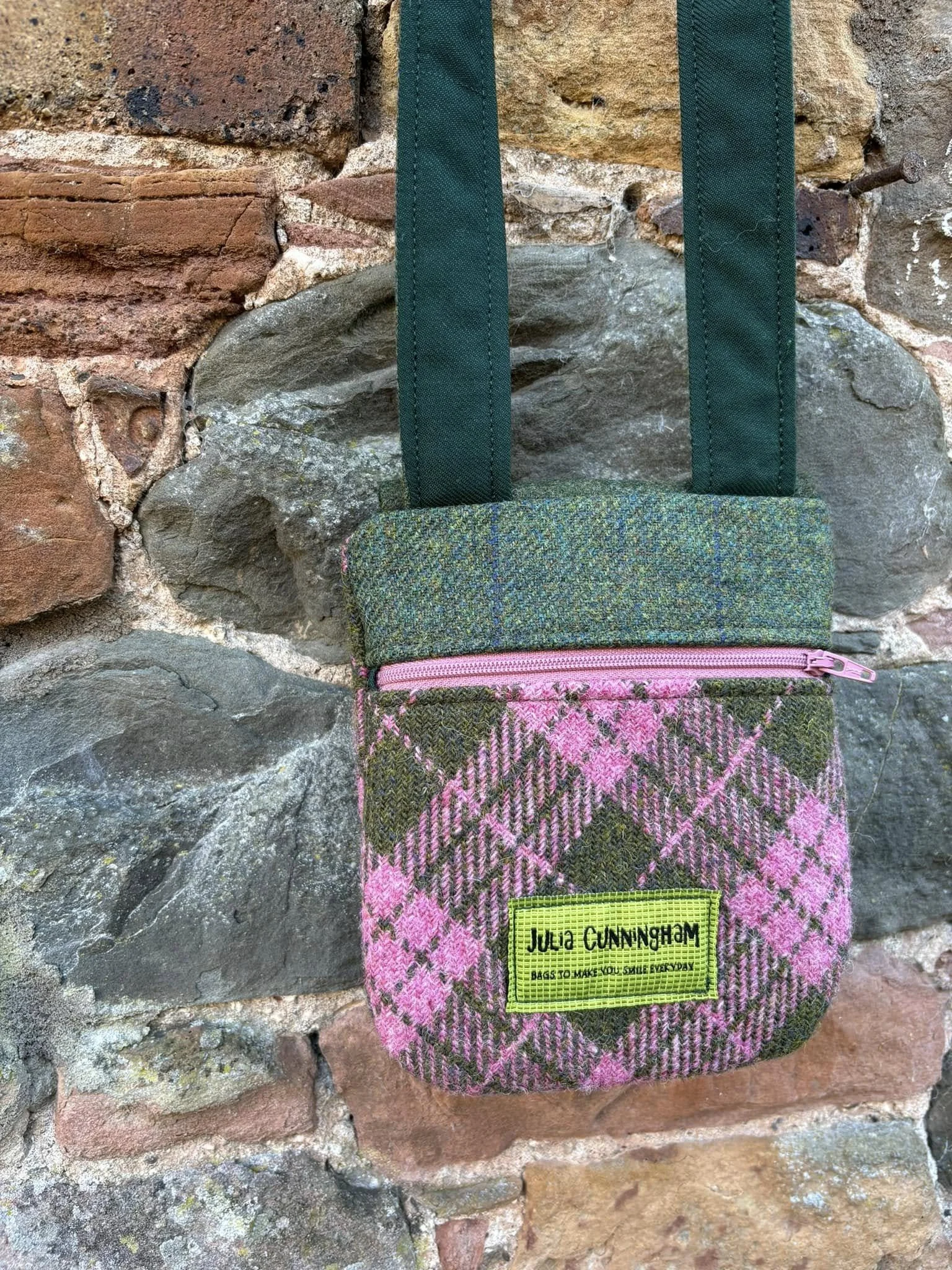
Detail of stitching around a the zip of a Tweedling crossbody bag
Reading Visual Craftsmanship Indicators in Product Photos
Evaluating Stitching Quality Through Close Up Images
Stitching is one of the clearest signs of craftsmanship. Good stitching is even, tight and consistent, with every stitch the same length and cleanly trimmed ends. Irregular spacing, skipped stitches, wandering lines or loose, looping threads suggest rushed or inexperienced work. Keep these signs in mind, because they apply to every part of the bag.
I work on two different machines, a domestic machine where I use light weight threads for sewing in zips and putting on labels. I use an industrial flat bed machine for the the bag construction, this can sew through many layers with heavier needles and much stronger threads and with longer stitch length.
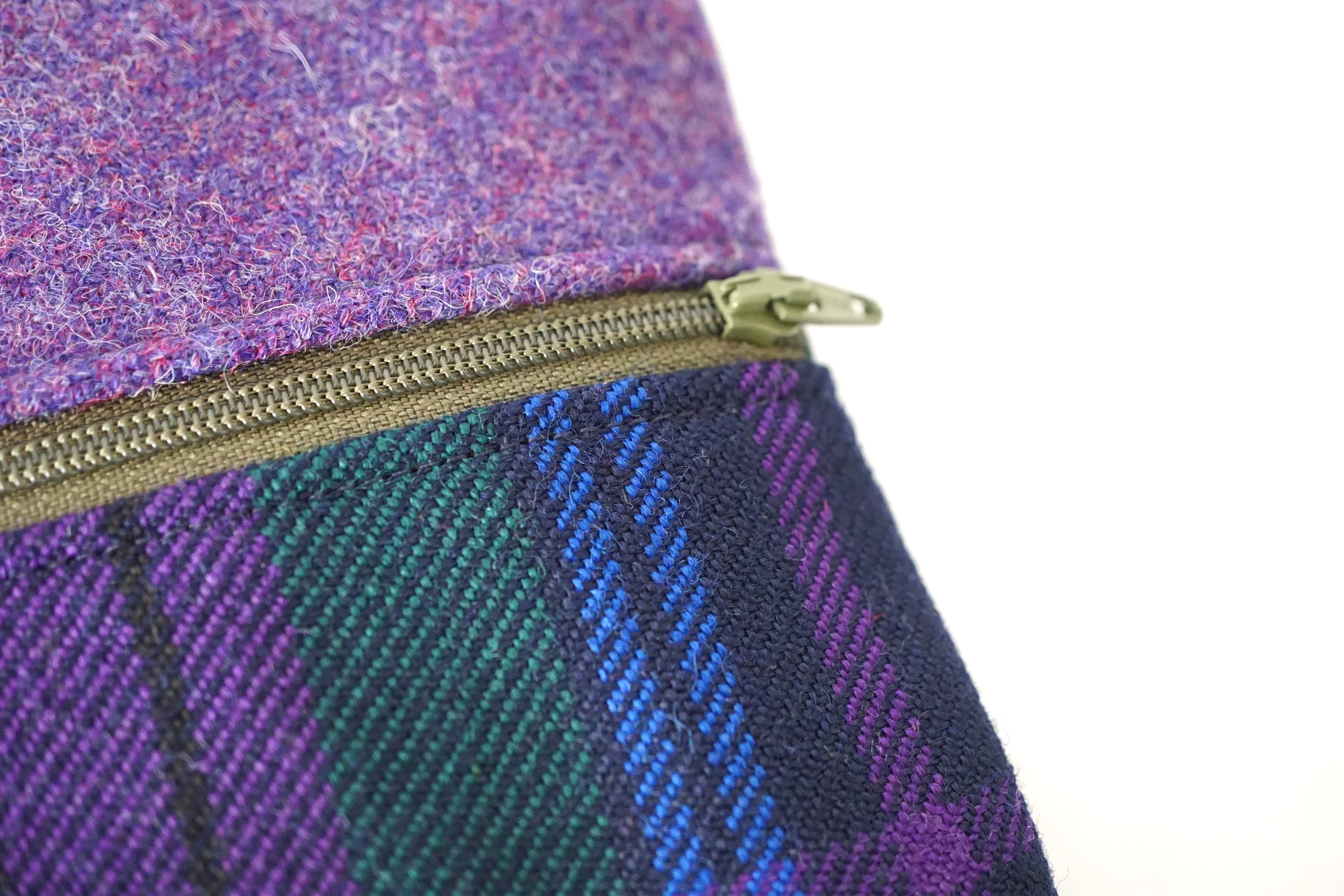
Seams around a zip on a Julia Cunningham Cross body phone bag
Assessing Seam Construction and Structural Integrity
Seams should lie flat, without puckering or twisting. Puckering usually points to tension problems or mismatched fabric handling. Inside the bag, look for seams that are bound, folded or overlocked rather than left raw. Panels on each side should mirror each other.
The stress points matter most: handle bases and the bottom of the bag. These should show extra reinforcement, with no stretching or distortion.
My bags are all fully lined, you will not see any raw edges or overlocking, reinforcement happens mostly on the inside, handles are stitched in 2 or three times on the inside especially on the larger bags like the rucksacks and shoulder bags as you may be carrying heavy items. I will often reinforce corners too with extra stitching. Much time is spent pattern matching this can be complex especially with tartans.
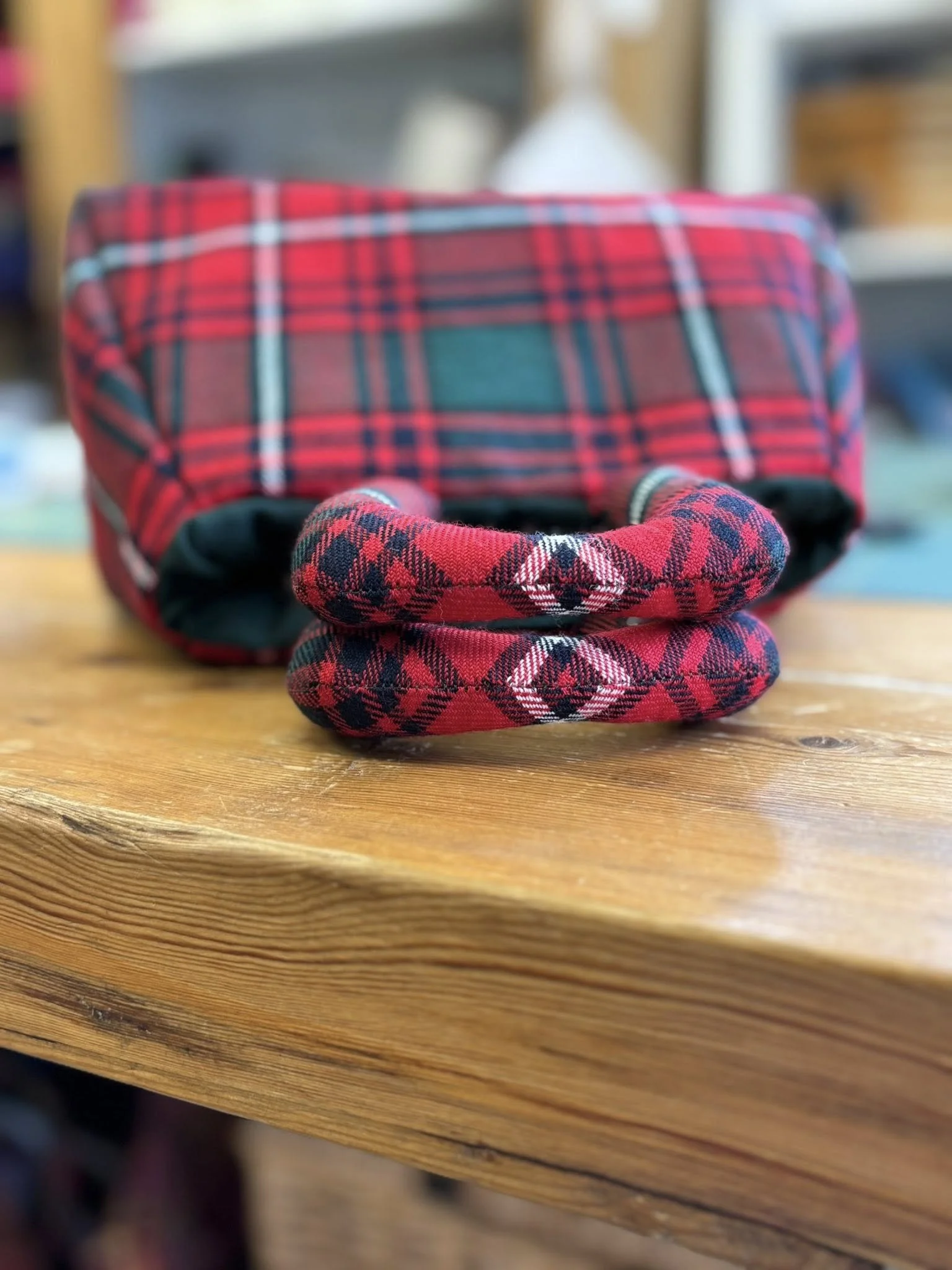
Pattern matching on padded handles on a tartan Fantoosh handbag
Inspecting Edge Finishing as a Quality Signal
Edges should be smooth and cleanly finished, with no fraying. On tweed or wool, look for edges that are neatly folded and secured. On leather, they may be burnished, painted or sealed.
Corners are especially telling. A well-made corner sits crisp, with the material neatly tucked. Bulky or uneven corners suggest inexperience or mass-production shortcuts.
Corners are always tricky especially when you have quite a few layers of fabric and the curve against a straight edge, I use clips and pins to hold things in place to stop slipping. I take time to make sure fabric is not puckering and if it is I will redo the seam sometimes adding reinforcement stitching.

Corner of a wee Fantoosh in Mixed Tartans
Judging Hardware Quality from Product Images
Hardware is structural, not just decorative. Look for a consistent finish, whether brass, zinc alloy or plated metal, without pitting, rough casting marks or patchy colour. Zips should have solid teeth and a sturdy pull.
Check how hardware is attached. Reinforced stitching, rivets or leather tabs signal durability. Thin fabric loops may not hold up over time.
I use a little hardwear on some of my bags, including Brass eyelets, Zips from a British manufacturer and plastic buckles and fastening solutions from a British Company who also supply the MOD, Police, Medical, Marine, PPE, Sports & Leisure, and beyond.
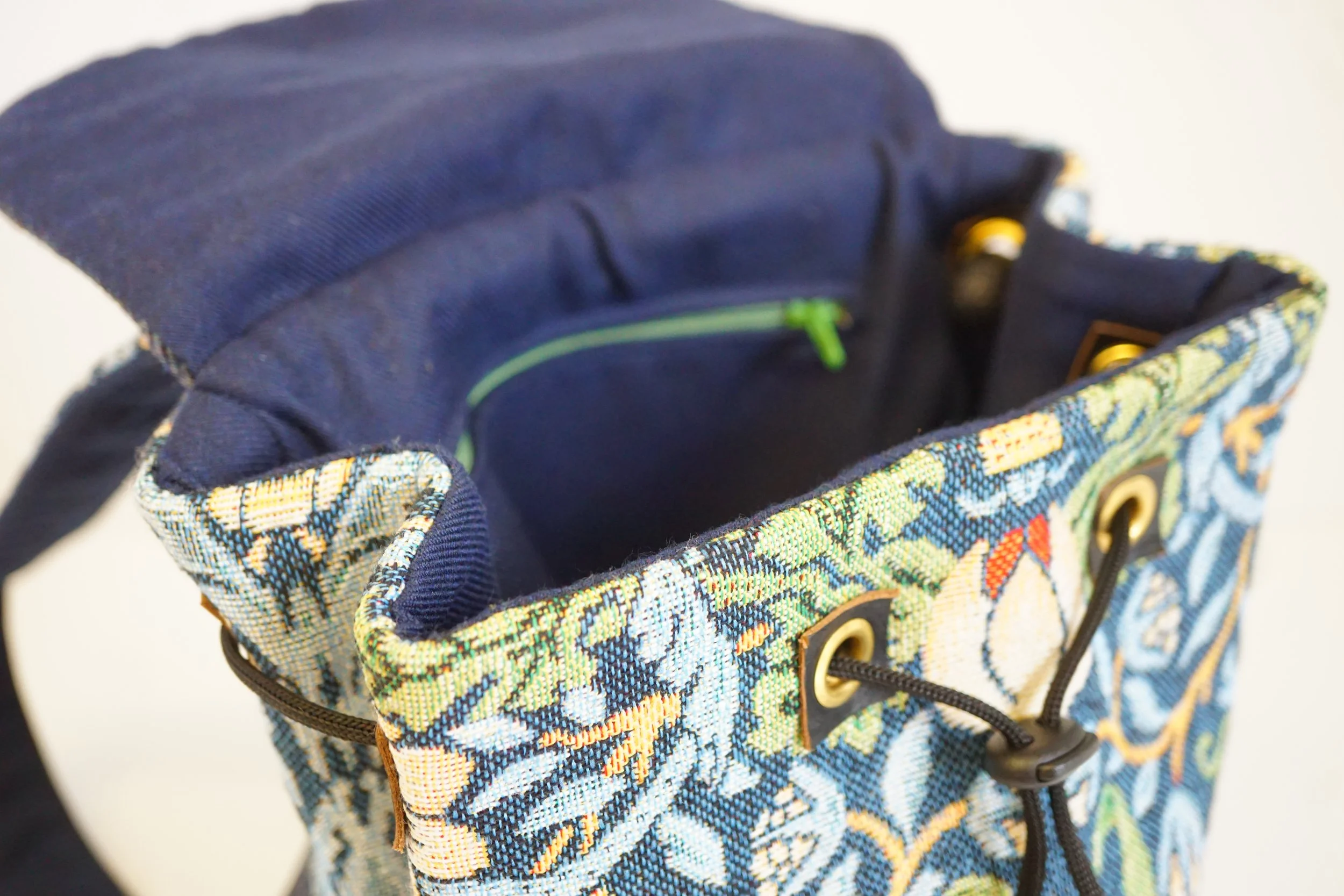
Eyelet detail with leather reinforcment put in with an industrial machine
Analysing Handle and Strap Construction
Handles and straps take the most wear. Both handles should match in width, shape and length, with no twisting. Double stitching, rivets or reinforced bases indicate strength. Rolled handles take more skill and time, but flat handles can be just as strong if well finished.
I make all my own handles from padded ones for handbags, shoulder straps for rucksacks, shoulder bags and cross body bags. This takes time but I think it is one of the elements that keep my bags uniquely Julia Cunningham. I can match them to the bag and sew them directly into the bag for strength.
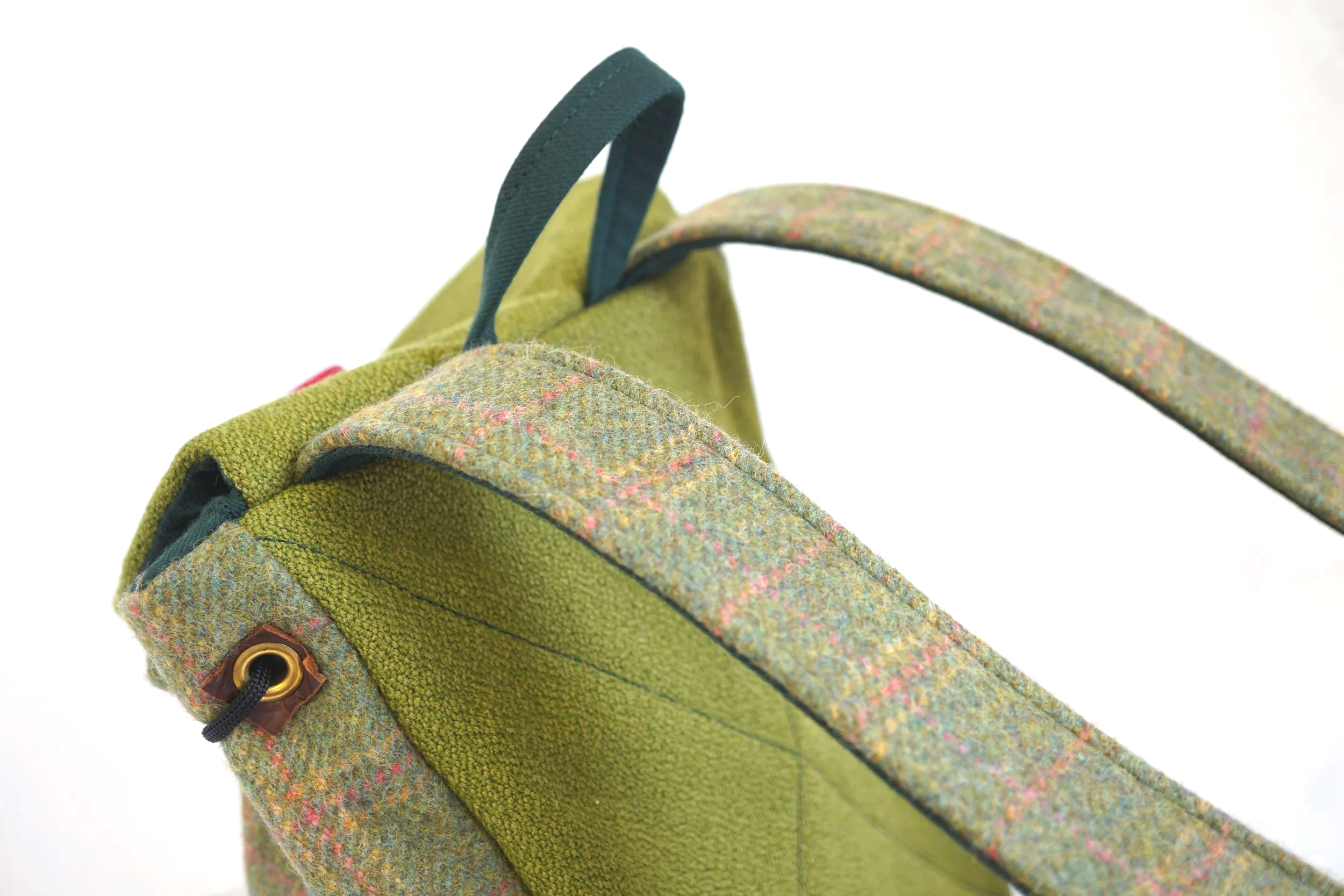
Where handles and straps meet the bag
Assessing Material Quality and Authenticity from Visual Details
Detecting Surface Flaws, Inconsistencies, and Defects
Uneven texture or colour across panels can point to lower-grade materials or careless cutting. A well-made bag also holds its shape when empty. If it sags or collapses in photos, it may lack proper interfacing or reinforcement.
I have been collecting fabric for 20 years and have quite a collection. I use Scottish Border heritage Mills , I also use mills from across the border too in England. I love our British woven fabrics. If I can use fabric that might be heading to landfill I will, end of lines, fabric with a slight fault in it, that I can work around and vintage pieces too. I have also bought straight from designers and scrap from tailors. I am always on the look out for interesting fabric that catches my eye. This keeps my bags unique and interesting.
I spend a lot of time matching pattern and cutting out, there are many layers of fabric in my bags which give them structure without them being hard.
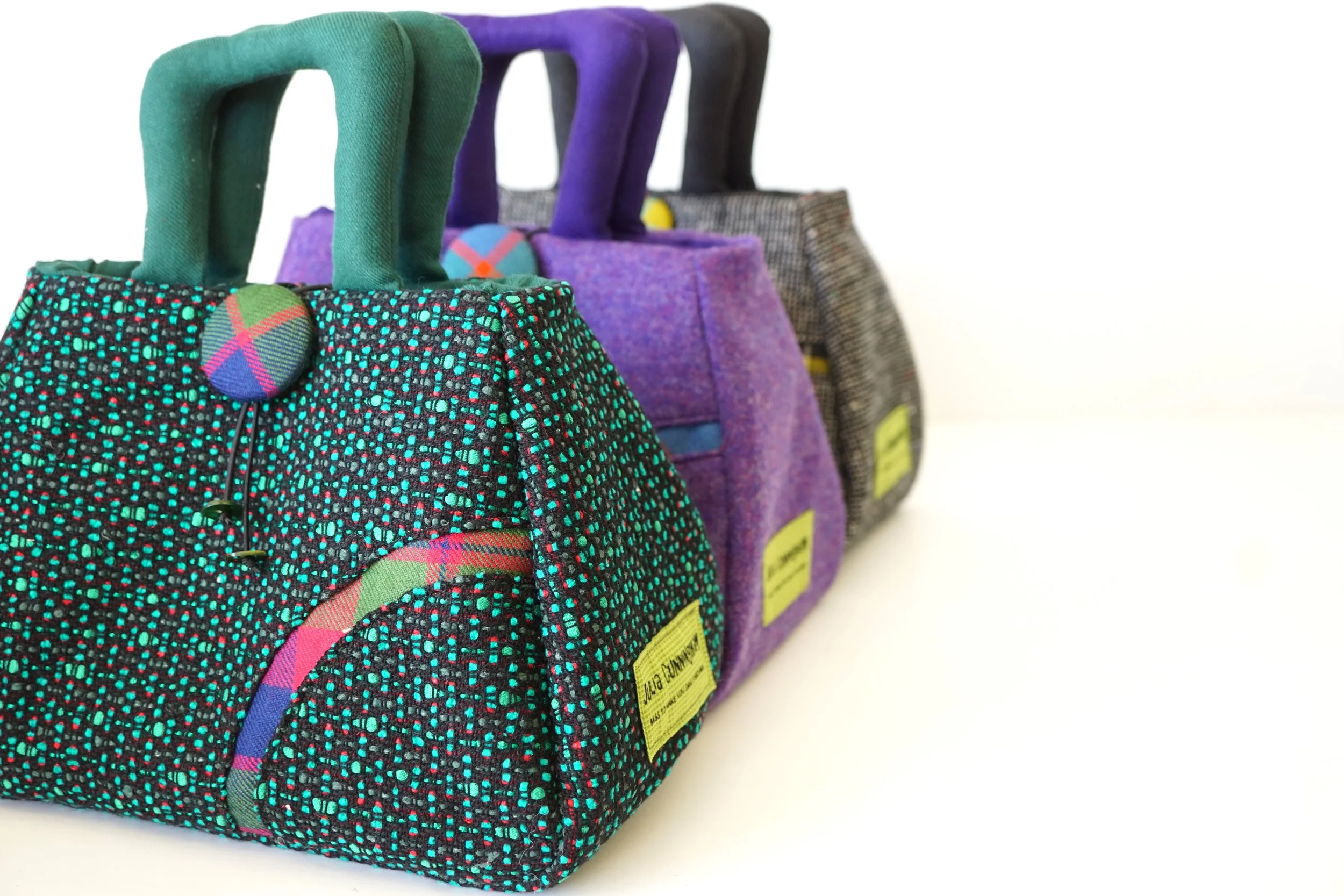
Two Fantoosh handbags holding their shape
Evaluating Lining Quality and Interior Construction
The lining should sit flat and be well attached, with no bunching. Pockets should be straight and level. Interior hardware such as snaps, D-rings and zip pulls should match the quality of the outside. Glue residue or crooked pockets are warning signs.
For my linings and many of my handles, I use a strong polyester/viscose fabric. There are lots of lovely colours to choose from, so I can have fun matching it with my tweeds and tartans. It’s woven in the UK, which is important to me as I like to support British manufacturing. I also don't use glue in my bags – they are all made using traditional sewing techniques.

Internal view of a wee Fantoosh handbag showing lining and internal zip
Using Photo Composition and Product Page Details as Quality Signals
A maker who is confident in their work will show it: several angles, inside and out, with close-ups of the details above. If key angles are missing, especially corners, interior seams or strap attachments, ask why.
Compare the description with what you can see. If a listing claims solid brass hardware but the finish looks overly shiny or uneven, trust the photos. Natural light shows texture and stitching best, while harsh studio lighting can hide flaws.
I always try to photograh my bags outside to get the best representation of the colours. I try to give lots of angles of the bag, the front, back, side and the inside of the bag. I also try to give a lifestyle photograph of the bag, sometimes it will be a similar bag in the photos just to show how it would sit or can be used. (Poor weather can influence whether this is always possible)
Recognising Authenticity and Brand-Level Quality Consistency
Look beyond a single product. Consistent stitching, finishing and materials across a makers collections signal good quality control. Customer review photos show how a bag holds up in real life.
Genuine handmade bags show small natural variations. Mass-produced bags, even when sold as handmade, tend to look identical. A visible maker mark or label is another sign of pride in the work.
As a maker I am proud of the bags I have designed and developed and I always enjoy adding my business label Julia Cunningham to my bags. I am am confident in my bags and happy to put my name on them. You will get some variation with my bags as I pride myself on producing unique quirky bags using mostly reclaimed found and some new fabrics. The variation comes as my bags have developed so styles have improved over the years. Each bag is made individually and that always leads to a little variation too.
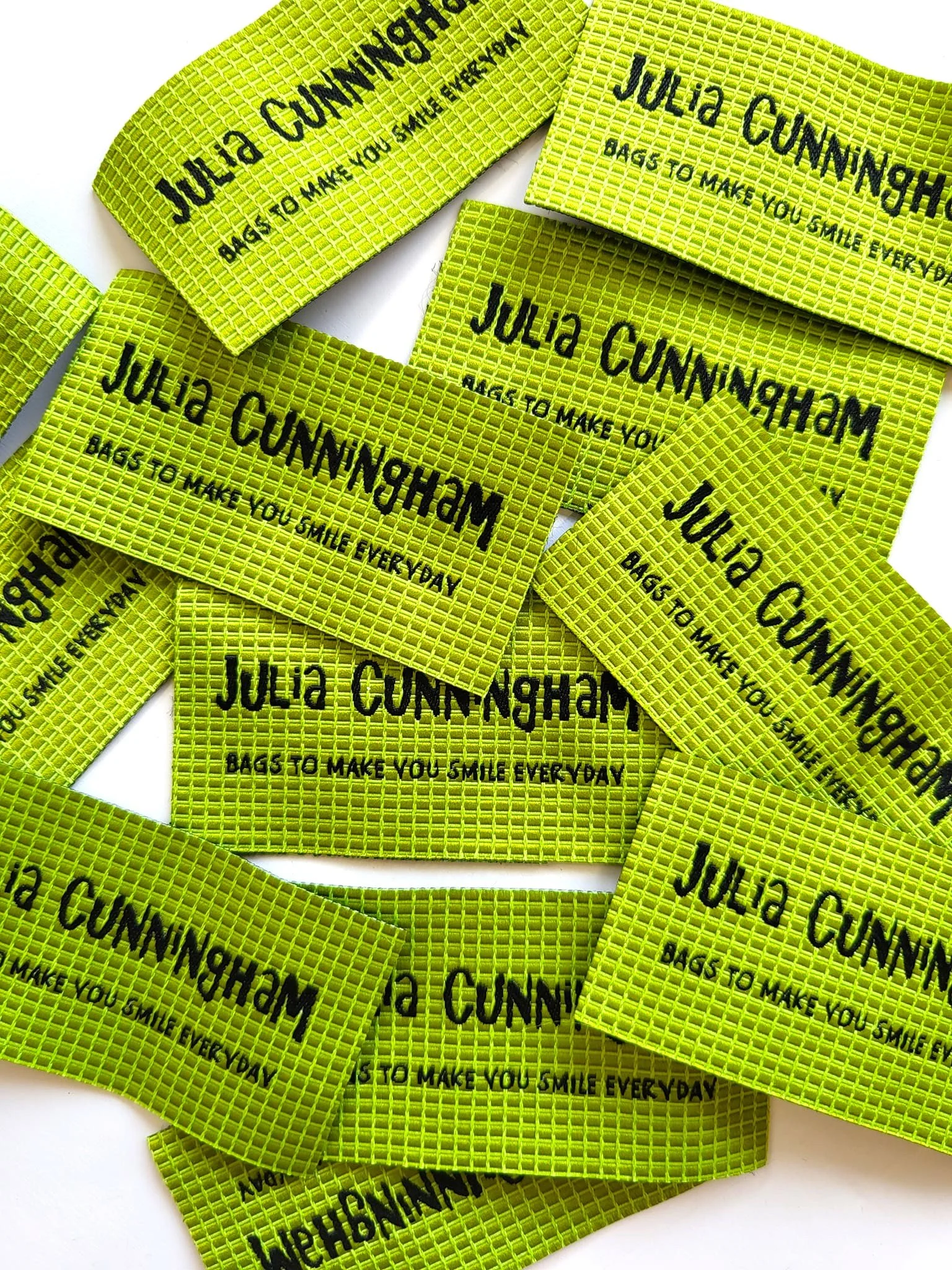
Julia Cunningham Labels
Want to know more Read my full Buying guide