
Tweed and Tartan Fabrics Explained
Not all tweed and tartan is created equal. Here's what actually goes into the fabric behind a well-made bag, including the mills, the weave, and how it stands up to everyday wear. Where the cloth comes from, who makes it, and why that matters when you're buying a handmade bag.
Where do the best fabric comes from-
“Heritage Scottish and English Tweeds and Tartans”
The best fabrics come from heritage mills with decades, sometimes centuries, of weaving expertise, they use high-quality wool, tight weaves, and colour palettes that stay beautiful for years.
Scotland is home to many iconic mills, including Lochcarron who recently wove the tartan for King Charles III’s Corination 2023 and Lovat Mill which has worked with Ralph Lauren, both world class mills based in the Scottish Borders, Bute Fabrics which is based on the Isle of Bute it produced hand-woven tweed for French couture houses in the 1960s, and Harris Tweed which is not one Mill but which is a protected cloth By an Act of Parliament and must be handwoven by indepandant artisan weavers in the Outer Hebrides.
England also has exceptional heritage mills, including Marton Mills in West Yorkshire who are also a large supplier of Tartan as well as Tweed and Linton Tweed in Carlisle who have close links with the high fashion brand Chanel, British manufacturing at its best, and fabric that's sought after around the world.
Those are some of the big players but there are also smaller and specialist Scottish/Borders producers and designers who are worth looking out for including Anrew Elliot in Selkirk and unfortunately many due to age and the economic climate have closed their doors including Hinnigan Fabrics, Anthony Haines and D. C. Dalgliesh Ltd. This makes any of their fabrics just a bit more special.
Understanding tweed weaves and patterns
Tweed often contains five to ten colours woven together, creating rich texture and surprising versatility, the final look depends on the yarns, the weave, and the pattern. Many weavers and mills create pattern cloth as well as single-colour cloth.
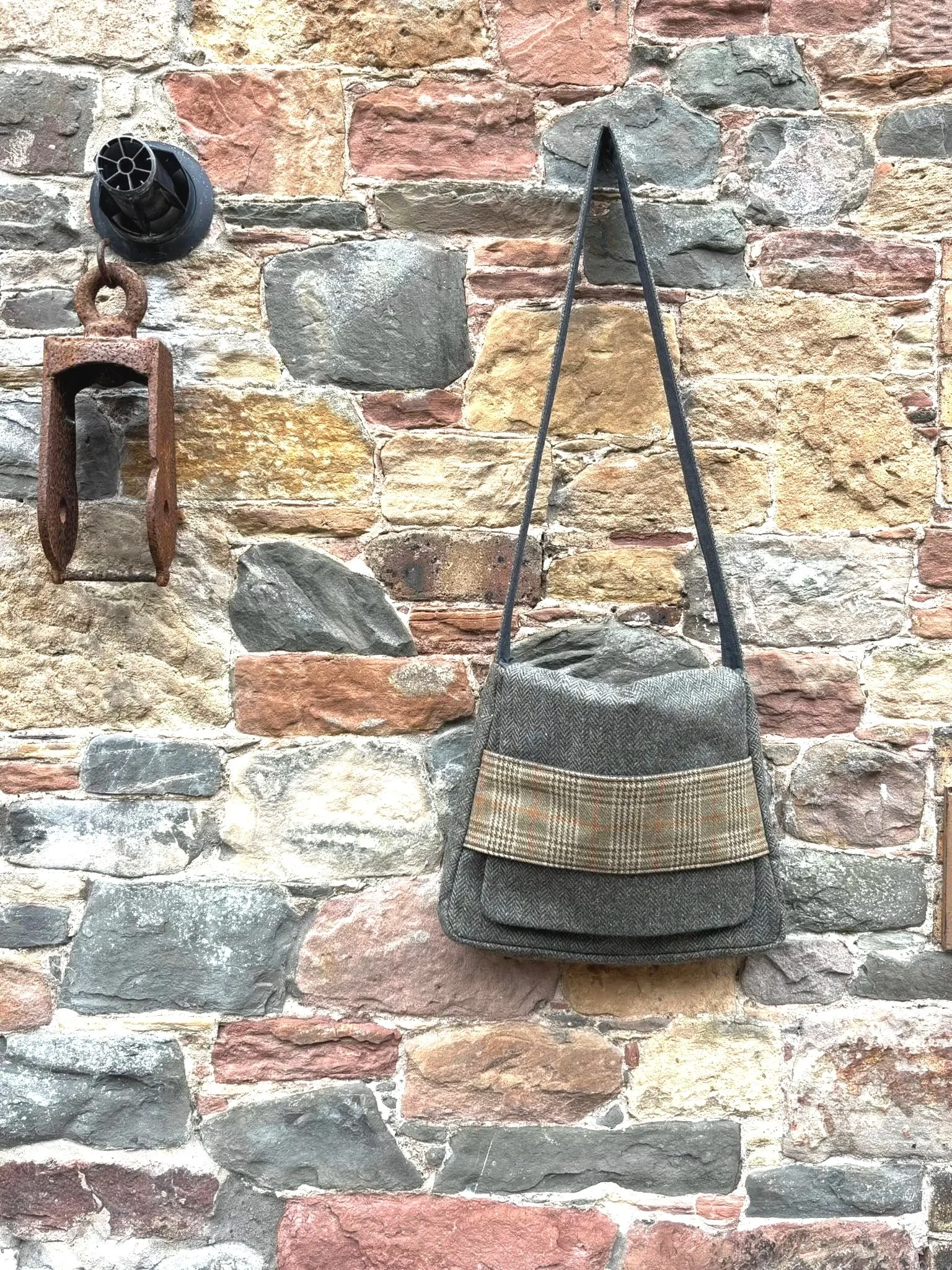
Iconic Tweed Patterns
Herringbone
Twill
Barleycorn
Houndstooth
Windowpane
Overcheck
Gunclub
The most iconic tweed patterns fall into a handful of classic weaving structures that mills have refined over more than a century: Each has its own structure, heritage and visual personality, these are worth knowing the names of if you want to ask a maker specifically what you're looking at.

How weather-resistant is tartan and tweed, really?
Pure wool tweed is naturally water-resistant, though not fully waterproof. Different weights of fabric offer different levels of weather resistance, and internal structure and lining can improve how a bag performs in poor weather. A good maker should be able to tell you how their bags behave in rain, and how to care for them if they do get wet.
Are all Tweeds and tartans 100% wool?
Not necessarily! This is where things can get a little confusing. Although traditional tweeds are often made from wool, and many traditional tartans are woollen, not every fabric described as “tweed” or “tartan” is 100% wool. You can find wool blends, cotton tweeds and fabrics made with synthetic fibres, each chosen to give a particular look, feel, weight or performance.
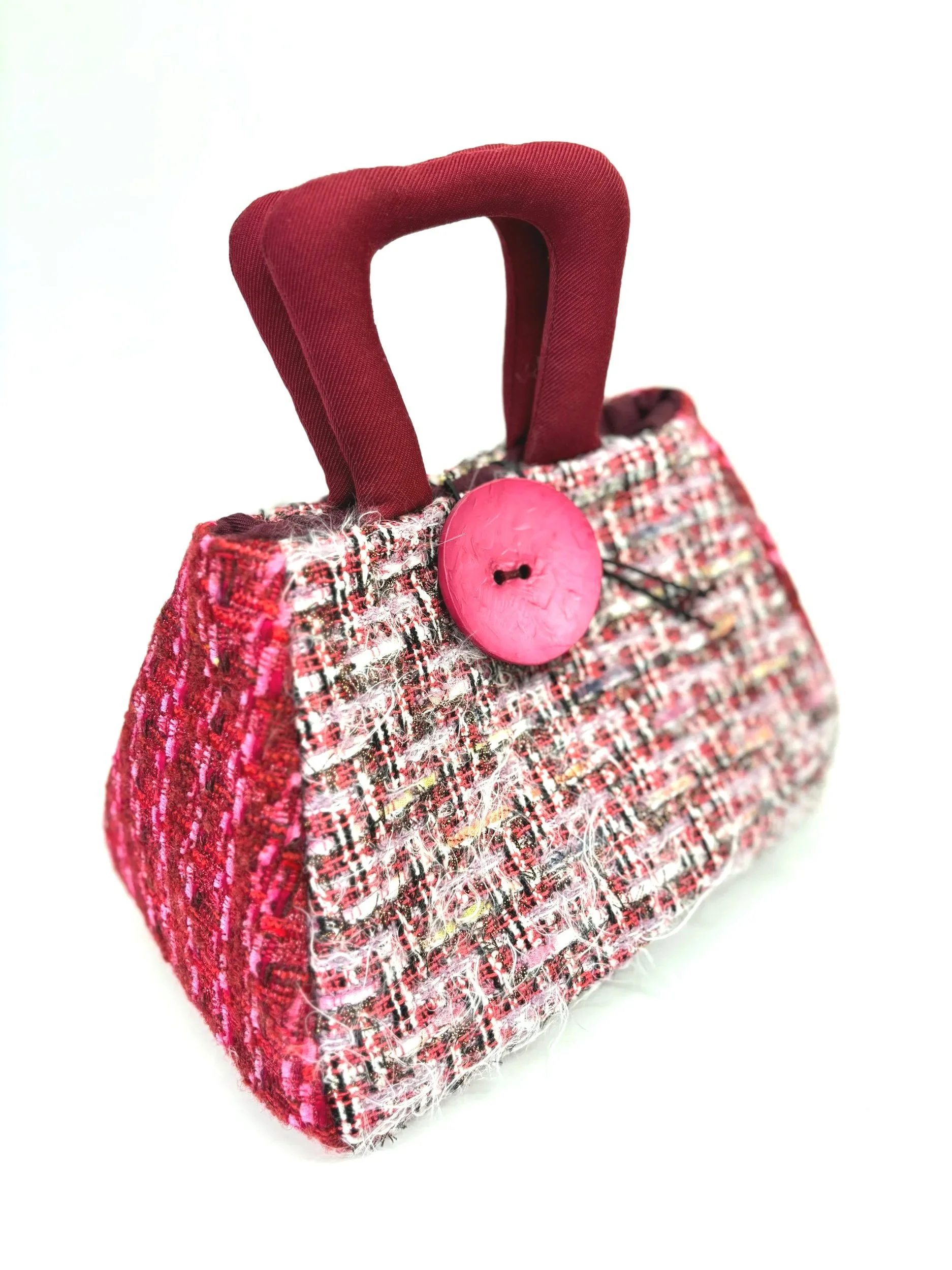
Linton Tweed is a good example of why it is worth checking the label rather than making assumptions. Linton is famous for its distinctive, colourful and often highly textured tweeds, but different fabrics can have different fibre compositions, including wool, cotton and blends. A fabric can therefore have all the character and appearance we associate with tweed without being made entirely from wool.
It is also worth being a little cautious when you see very inexpensive tartan products. Not all tartan is woven in Scotland or even in the UK, and some very cheap tartan fabrics and products are mass-produced overseas, sometimes using synthetic fibres rather than wool. There is nothing inherently wrong with buying an overseas-made or blended fabric, but if British manufacture, Scottish provenance, natural fibres or supporting traditional weaving skills are important to you, it is worth looking at the label and asking where the cloth was woven and what it is made from. The word “tartan” itself doesn't automatically tell you where a fabric was produced.
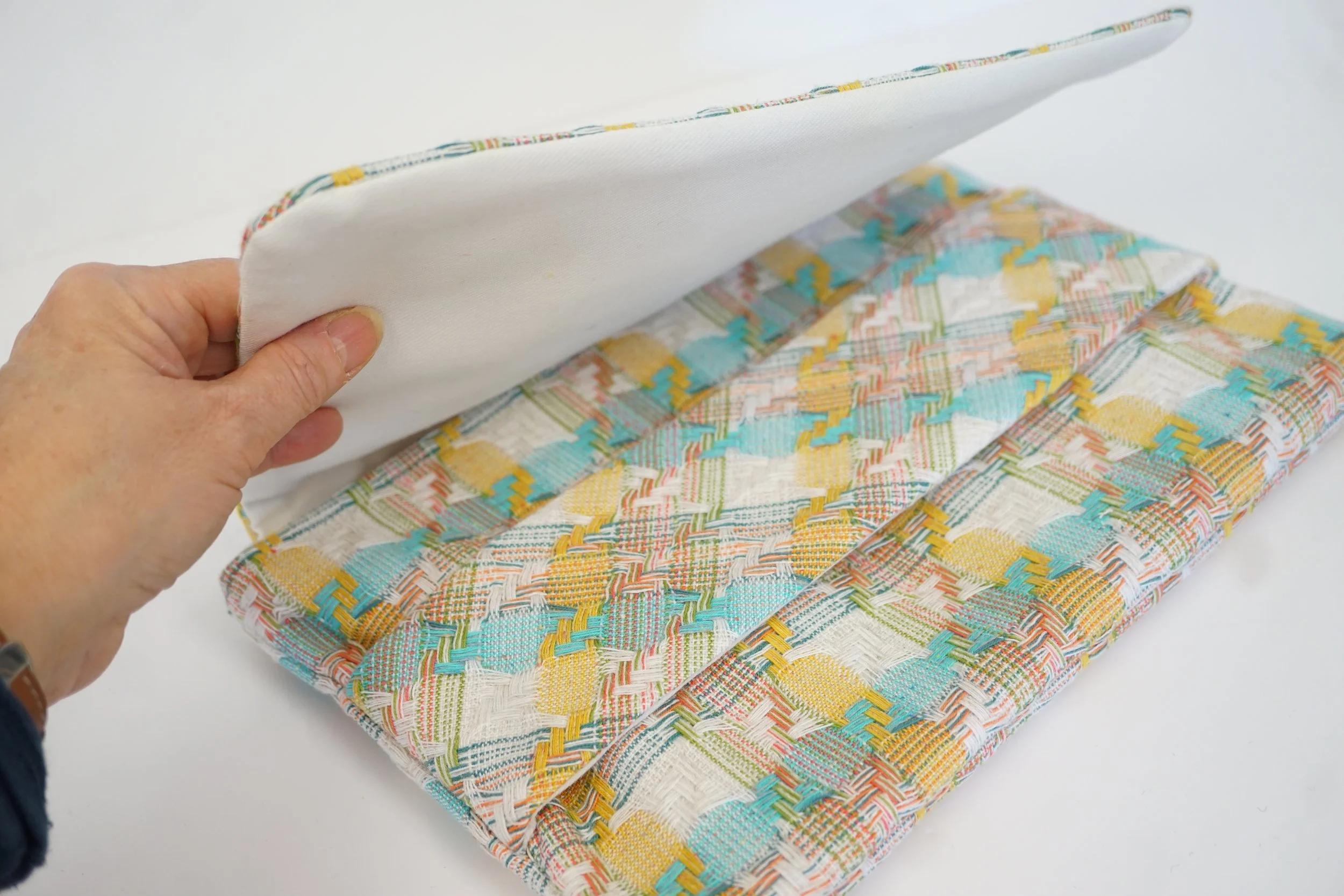
Clutch bag in a cotton tweed
For me, the fibre content and provenance both matter. When I’m choosing cloth for my bags, I particularly love the warmth, texture and character of natural wool, and I enjoy working with cloth woven by British mills with generations of textile knowledge behind them. That provenance is part of the story of the finished bag. But there are also lots of beautiful fabrics out there which I might come across and will make it into my collections.
So, before you buy, have a look beyond the pattern: what is it made from, where was it woven, and who made it? Sometimes those details tell you far more about the fabric than the word “tartan” or “tweed” on the label.
If you want to know how to tell a well-made bag from a lower- quality one from photos Read my guide How to Judge the Quality of a Handmade Bag from Product Photos Alone